JULY 2026 MARKET UPDATE: PHOENIX, SCOTTSDALE & PARADISE VALLEY
June 2026 Data | The Pontikas Team | Source: RPR/ARMLS
Happy July, friends! I'm sharing the June numbers this month — and I want to do something a little different. I want to give you the real story behind the data, not just the headline stats. Because some of those numbers look better than what's actually happening on the ground in certain neighborhoods, and I think you deserve to know that.
THE SUMMER SLOWDOWN IS REAL — AND IT'S SHOWING UP IN THE DATA
One of the trends I've been watching closely is shrinking inventory across all three markets. On the surface, declining inventory sounds like great news for sellers — less competition, tighter supply, right? But it's important to understand why inventory is shrinking before drawing conclusions.
The honest answer is: it's a combination of things. Yes, some homes are going under contract and closing. But a meaningful portion of that inventory decline is sellers — including a couple of my own Phoenix clients — choosing to pull their listings for the summer because activity slowed significantly and sitting on the market wasn't serving them. We made the strategic decision to take those homes off in July and plan to relist in August with fresh eyes and renewed energy.
This is actually a completely reasonable and smart move in the right circumstances. Homes that linger too long accumulate "days on market" that can work against you with buyers. A clean reset can make a real difference. But the takeaway here is that not all inventory shrinkage equals a hot market — sometimes it's just the summer effect, and that's worth naming.
With that context in mind, here's what the June data shows for each market:
PHOENIX: SOLID OVERALL, BUT HYPERLOCAL MATTERS
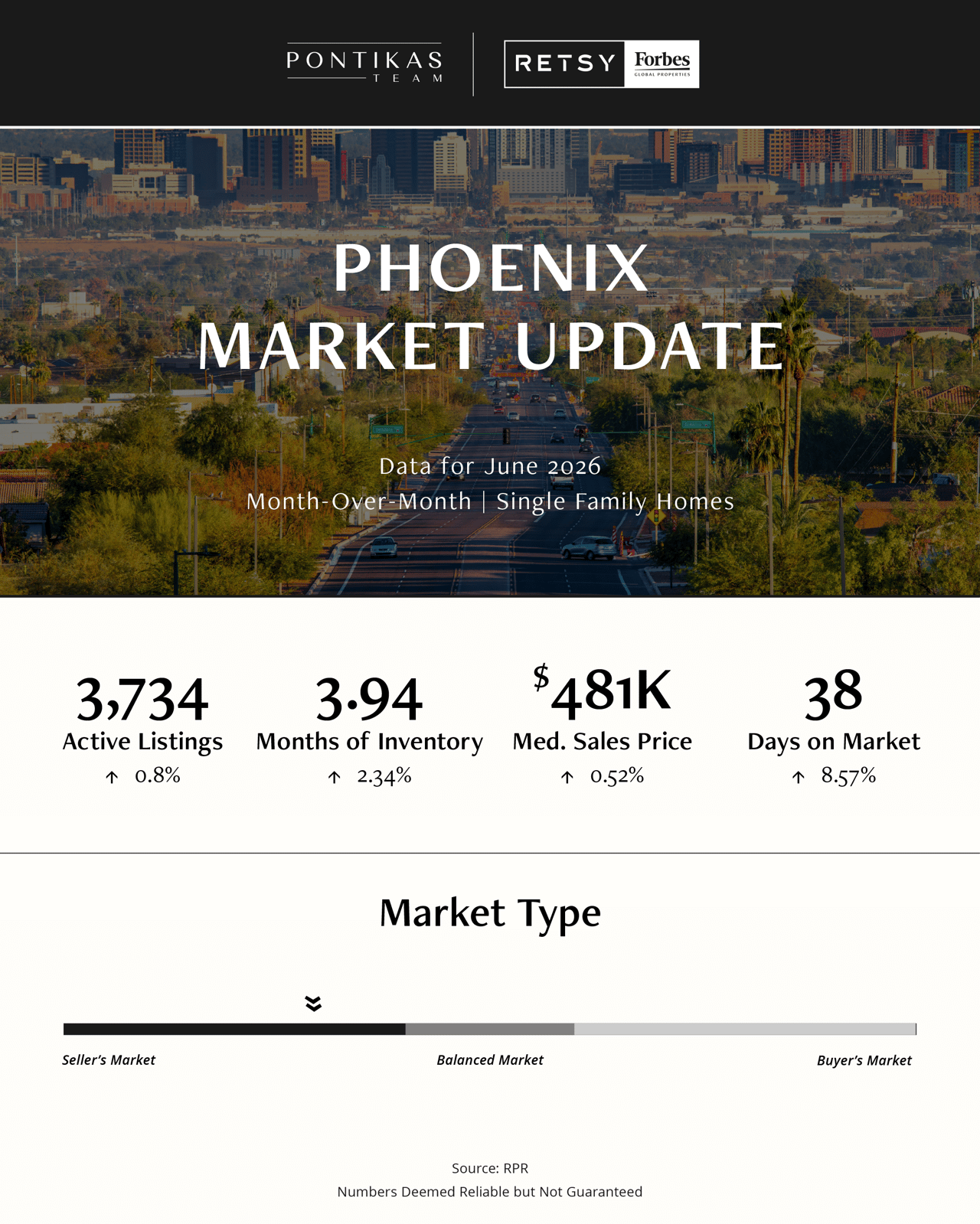
The June numbers for Phoenix look genuinely good on paper. Median sold price came in at $481,000, up slightly from last month. Sellers received 97.9% of their asking price on average. Homes averaged 38 days on market. Months of inventory sits at 3.94 — solidly in seller's market territory.
But here's what I want to be clear about: Phoenix is a big, diverse city, and the overall market statistics mask a lot of variation neighborhood by neighborhood and price point by price point. Homes in certain areas and at certain price points are moving quickly and getting strong offers. Others have been sitting with minimal showings and little traction — which is exactly what I mentioned above with my own clients.
The Cromford Report notes that new listings in Greater Phoenix are being added at the second-lowest rate since 2000. Some of that is sellers choosing to wait. Some of it is the holiday effect — we came through Memorial Day, then Fourth of July, both of which historically dip buyer contract activity for a week or two on either side. The good news is that post-holiday, activity tends to bounce back, and with Labor Day still several weeks away, there's a meaningful window of summer selling opportunity right now. What to watch is whether rates ease toward 6.0–6.25% as summer progresses, because even a modest rate drop could meaningfully boost buyer contract activity heading into fall.
For Phoenix sellers: If your home is priced right, shows beautifully, and is in a desirable area, June's numbers suggest you can still get a good result. But if you've been on the market for 45+ days with minimal showings? It may be worth having an honest conversation about whether a summer pause and August relaunch makes more sense than grinding through July. I'm always happy to talk through that.
For Phoenix buyers: At 97.9% sold-to-list and 38 days on market broadly, Phoenix isn't a buyer's market — but it's also not uniform. There are pockets of opportunity, especially in neighborhoods where sellers have been sitting for a while and may be more motivated. Working with someone who knows the hyperlocal data is everything right now.
SCOTTSDALE: PRICES UP, INVENTORY TIGHTENING
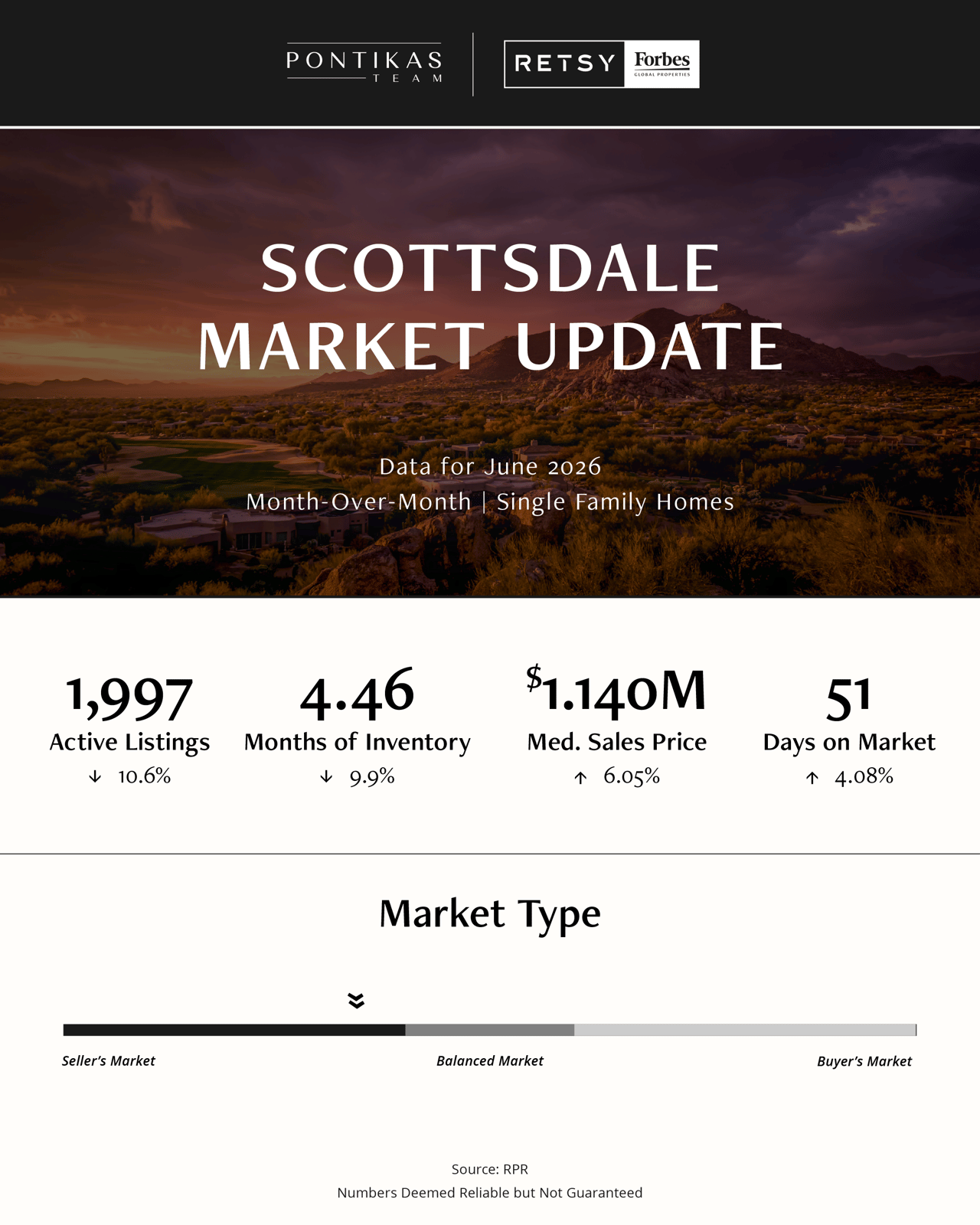
Scottsdale had a strong June by the numbers. The median sold price rose to $1.14 million, up 6% from May — and 520 homes closed. Sellers received 96.5% of their asking price. Months of inventory dropped nearly 10% month-over-month to 4.46 months, and is down 18% compared to a year ago.
Scottsdale's inventory decline is a real story — this isn't just the summer pullback effect. The 12-month trend of declining supply combined with rising prices tells a more genuine tightening story. The market-type indicator sits on the seller's side of balanced, and the data supports that.
That said, even in Scottsdale, condition and pricing matter more than they did a few years ago. Buyers here are sophisticated. They're comparing your home not just to other resales but to new construction and builder incentives. Homes that shine get rewarded. Homes that are overpriced or need significant work sit longer.
For Scottsdale sellers: June's numbers are encouraging. If you've been on the fence about listing, the combination of rising prices and tightening supply makes a case for moving sooner rather than later — before any potential fall inventory surge.
For Scottsdale buyers: Inventory is genuinely tighter here than in Phoenix broadly. Waiting for a better deal may not be the strategy it sounds like. Find the right home, understand its value, and make a confident offer.
PARADISE VALLEY: THE SUMMER PULLBACK IS IN FULL EFFECT
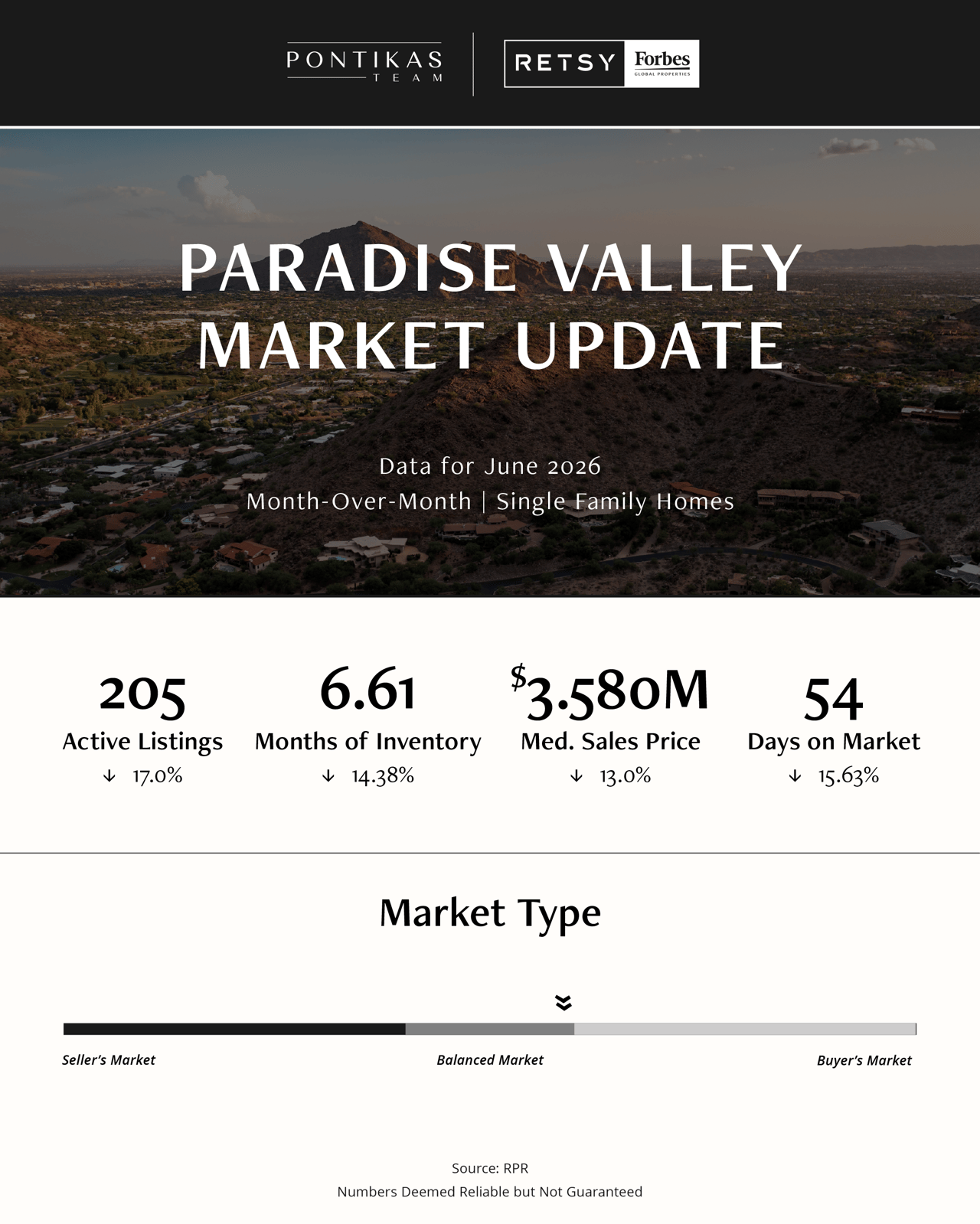
Paradise Valley is doing exactly what it does every summer. June saw 29 homes close at a median sold price of $3.58 million, with sellers getting 94.6% of asking and homes averaging 54 days on market — actually faster than last month. Months of inventory dropped 14.4% to 6.61 months, with active listings down 17% month-over-month to just 205 homes.
Here's the important nuance for Paradise Valley specifically: the inventory decline here is almost entirely the summer pullback effect. Luxury sellers leave for cooler climates, pull their listings, and the pool of active inventory shrinks dramatically. The interesting consequence — which played out in real time last year — is that the sellers who stay on the market suddenly have almost no competition. PV flipped from a balanced market in May 2025 to the #1 seller's market in Greater Phoenix by August, simply because listing cancellations outpaced the seasonal slowdown in demand.
We're watching for the same pattern this year. With active inventory already contracting sharply, sellers who remain active through the summer are in a potentially advantageous position.
For Paradise Valley sellers: The data supports staying the course. Your competition is going dark. If your home is exceptional and priced correctly, summer in Paradise Valley can actually be a quieter but more productive selling environment than spring.
For Paradise Valley buyers: With 94.6% sold-to-list, there's modest negotiating room — but don't confuse the slower pace for a weak market. At this level, the best homes are always limited. Move with intention when you find the right one.
LOOKING AHEAD: WHAT TO WATCH THIS SUMMER
The pattern to track is mortgage rates. Rates are sitting around 6.5% right now. Last summer, when rates slid from 6.6% to 6.1% between August and September, buyer contract activity spiked meaningfully before Labor Day slowed things back down. If that happens again — and the Mortgage Bankers Association projects rates to drift toward 6.3% by year-end — sellers who are patient and stay active through July and August could be in a strong position come September.
As always, the right strategy depends entirely on your specific situation: your neighborhood, your price point, your home, your timeline. I'm always here to have that conversation and give you a real, honest assessment — not just a cheerful headline.
Feel free to reach out anytime.
— Debbie Pontikas, The Pontikas Team
Phoenix & Scottsdale, AZ | pontikasteam.com | @DebbiePontikasRealtor
Source: RPR/ARMLS. Numbers deemed reliable but not guaranteed.