If you own a home in Arcadia, summer is not the season to wing it. In Phoenix, average highs climb above 100°F from June through September, and that long stretch of heat can put pressure on your AC, landscaping, utility bills, and exterior systems. A simple, well-timed checklist can help you stay ahead of costly issues, protect your home’s finishes, and keep day-to-day comfort in check. Let’s dive in.
Why summer prep matters in Arcadia
Arcadia homeowners are not preparing for a few hot weekends. Phoenix’s 1991 to 2020 climate normals show average daily highs of 104.2°F in June, 106.5°F in July, 105.1°F in August, and 100.4°F in September.
That means your home may face months of heavy cooling demand, intense sun exposure, and higher water use. Summer also overlaps with monsoon season, which runs from June 15 through September 30 and can bring damaging winds, lightning, dust storms, and flash flooding.
On top of that, Phoenix Water Services notes that volume charges are highest from June through September. In practical terms, smart summer prep can support comfort and help you avoid waste at the exact time costs tend to rise.
Start with your AC system
In Arcadia, your cooling system does the hardest work of the year in summer. If there is one item to handle before peak heat, it is AC maintenance.
The U.S. Department of Energy says regular maintenance of filters, coils, fins, and refrigerant lines is essential for efficient cooling. APS also advises homeowners to service the AC yearly and change filters monthly during the cooling season.
Schedule service before peak heat
Late spring is the ideal window to book annual service before the longest heat stretch begins. If you wait until the first extreme-heat week, appointment availability may be tighter and your system may already be under strain.
A pre-summer visit can help confirm that your system is ready for long run times. It also gives you time to address airflow issues before they affect comfort.
Check filters and airflow
Dirty filters reduce airflow, which can make your system work harder. DOE guidance notes that filters may need cleaning or replacement every month or two during cooling season, and APS recommends a monthly check.
As part of your checklist, inspect the filter regularly and replace it when needed. Also make sure indoor vents are not blocked by furniture, rugs, or décor.
Clear the outdoor condenser
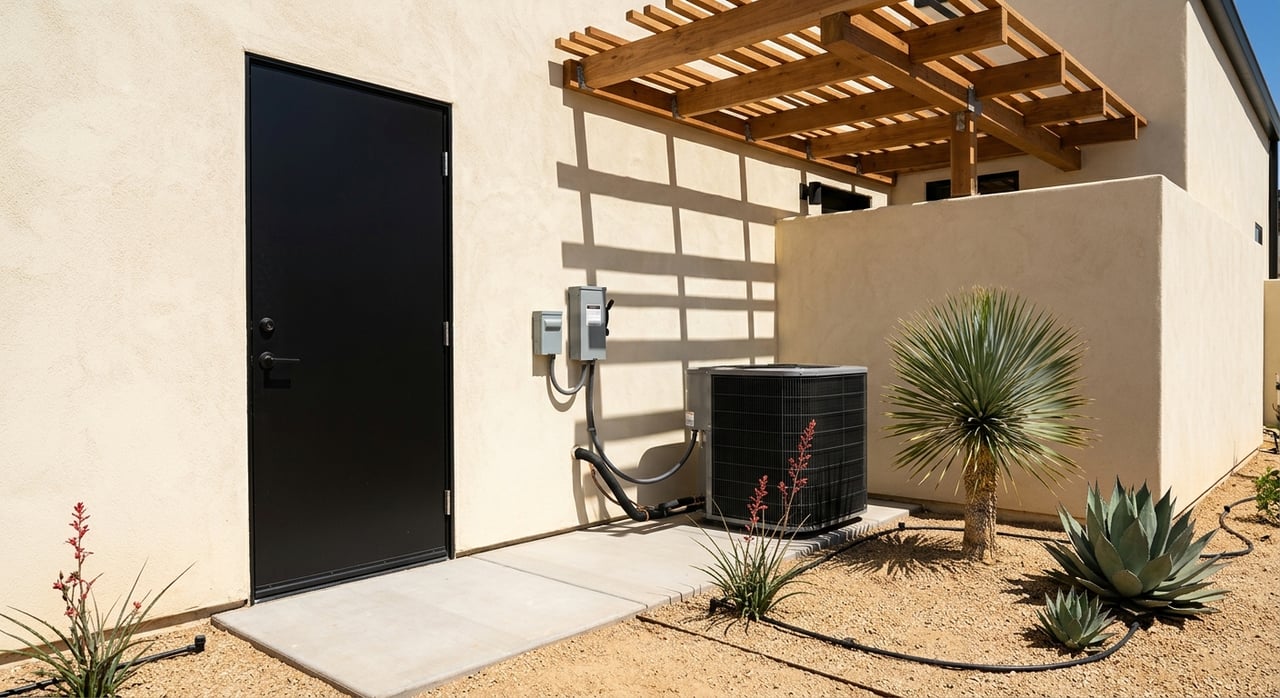
Your outdoor unit needs breathing room. DOE recommends keeping the condenser area clear and trimming foliage back at least two feet.
This is a quick task, but it matters. Better airflow around the unit supports efficient operation during long, hot afternoons.
Review thermostat settings
APS says each degree you raise the thermostat can save roughly 2 to 3 percent on cooling costs. Even a modest adjustment can make a difference over a full Phoenix summer.
If you are looking for an easy efficiency win, review your settings now. A small increase when you are away or asleep may help lower cooling costs without sacrificing comfort.
Tune your irrigation for desert summer
Landscaping needs a different approach in Arcadia than it does in milder climates. Phoenix’s landscape watering guide says plants can use 3 to 5 times as much water in hot, dry summer as they do in winter.
That makes irrigation checks one of the most important parts of a desert homeowner checklist. It is about plant health, water efficiency, and managing summer utility costs.
Adjust watering seasonally
According to the City of Phoenix, seasonal adjustments can reduce landscape watering by 30% to 50%. If your controller is still set for spring or cooler weather, you may be under-watering some plants or over-watering others.
Watering frequency depends on plant type, soil type, plant size, and whether the planting is established. Desert-adapted trees and shrubs generally need less frequent watering than warm-season grass in summer.
Inspect sprinklers and emitters
Phoenix recommends routine summer inspections in June and again in August. Walk your yard while the system runs and look for clogged emitters, broken sprinkler heads, leaks, runoff, or water hitting hardscape instead of planting beds.
Small irrigation problems can quietly waste a lot of water during the highest-rate months. Catching them early is one of the simplest ways to protect both your landscape and your bill.
Check controller settings after outages
Summer storms and power interruptions can reset irrigation timers or affect programmed settings. Phoenix’s watering guide specifically recommends verifying controller settings after power outages in July.
This is an easy item to forget, but it can create problems fast. One reset controller can mean missed watering cycles or an overwatered yard.
Separate plants by water needs
Phoenix guidance notes that trees and shrubs should be on separate valves when possible. Grouping plants with similar needs can make watering more precise and reduce waste.
Mulch and regular weeding also help. Both support moisture retention and reduce competition for water during the hottest part of the year.
Protect your home from sun and heat
Summer comfort is not only about the AC. In Arcadia, direct sun through windows can add glare, increase indoor temperatures, and contribute to fading on floors, rugs, furniture, and artwork.
DOE says cooling-season window coverings can materially reduce unwanted solar heat. This is especially helpful on windows that receive direct summer sun.
Focus on east- and west-facing windows
East- and west-facing windows often deserve extra attention in summer. They are more likely to bring in strong glare and unwanted heat during morning and late-day sun.
If certain rooms always feel warmer, start there. Often, targeted changes on those exposures can improve comfort without a major project.
Use effective window coverings
DOE notes that exterior shades and awnings are among the most effective options for reducing solar heat gain. Inside the home, cellular shades can also be effective.
Even simple habits help. Closing draperies on windows with direct sun can reduce heat gain during the hottest hours of the day.
Consider finish-friendly upgrades
Window films can reduce solar heat gain and UV exposure, which may help limit fading on interior finishes and furnishings. For homeowners thinking longer term, DOE also points to low-e or solar-control glazing and cool roofs as options that can reduce heat transfer.
These are not must-do items for every home, but they can be useful if you are planning improvements with both comfort and preservation in mind.
Walk the exterior during monsoon season
Monsoon season changes the summer checklist. The National Weather Service in Phoenix says thunderstorms can bring flash floods, damaging winds, dust storms, and lightning.
That means your exterior should not be a set-it-and-forget-it part of the house. A quick post-storm walkthrough can help you spot small issues before they become larger repairs.
Check drainage after storms
After a heavy storm, look for standing water near the foundation, blocked drainage paths, and areas where water pooled against hardscape or planting beds. Even in a dry climate, sudden rainfall can reveal drainage weaknesses.
This is especially useful after intense monsoon activity. You are looking for how water actually moved across your property, not how you expected it to move.
Look for wind damage and debris
Strong monsoon winds can scatter branches, clog drains, or damage exterior elements. After a storm, inspect the yard, clear debris, and take note of anything that could interfere with drainage or irrigation.
This kind of quick reset also helps keep the property looking cared for through the season. That matters whether you are staying put or thinking ahead about future resale.
Keep your checklist simple
The best summer checklist is the one you will actually use. In a climate like Arcadia’s, you do not need dozens of complicated tasks. You need a few smart ones, done at the right time.
Here is a practical rhythm to follow:
- Late spring: schedule AC service, replace filters, clear the condenser, review thermostat settings
- Early summer: adjust irrigation for the season, inspect sprinklers and emitters, add mulch where needed
- Mid-summer: verify controller settings after outages, check filters again, monitor east- and west-facing rooms for heat and glare
- After monsoon storms: walk the exterior, check drainage patterns, clear debris, inspect irrigation performance
A smart checklist also protects value
Good summer maintenance is about more than comfort. It helps protect systems, preserve finishes, and reduce avoidable wear during the most demanding season of the year.
If you are planning to sell in the future, these habits can also support presentation and upkeep over time. Well-maintained homes tend to show more consistently, and thoughtful care is often visible in the details.
At The Pontikas Team , we believe homeownership should feel supported long after closing. If you need trusted guidance, local vendor referrals, or a strategy for preparing your Arcadia home for its next chapter, we’re here to help.
FAQs
When should Arcadia homeowners schedule AC maintenance for summer?
- Late spring is the best time, before the long June through September heat stretch puts heavy demand on your cooling system.
What should Arcadia homeowners check after a summer power outage?
- Check your irrigation controller and confirm that the program settings are still correct, since summer outages can affect watering schedules.
Why is irrigation tuning important for Arcadia homes in summer?
- Phoenix guidance says plants can use 3 to 5 times as much water in hot, dry summer as in winter, and summer water charges are also highest from June through September.
What window treatments help reduce summer heat in Arcadia homes?
- DOE says exterior shades and awnings are among the most effective options, while cellular shades and closed draperies can also help reduce solar heat gain.
What should Arcadia homeowners inspect after a monsoon storm?
- Walk the exterior and check for standing water, blocked drainage paths, debris, wind damage, and any irrigation issues that may need attention.