Happy October, friends. I'm going to be straight with you this month — because I think you deserve a real read on what's happening, not a polished version of it.
The market is slow. And I don't mean seasonally slow. I mean genuinely, noticeably quiet in a way that goes beyond what October typically brings. Listings are sitting. Showing requests have dropped. I'm hearing it from agents across the Valley, and the data backs it up. So let's talk about why, what it means, and what — if anything — it signals about where we're headed.
WHAT THE DATA IS ACTUALLY SAYING
The ARMLS September numbers tell the clearest story. While new listings jumped 15% month-over-month and active listings across Greater Phoenix climbed to 25,251 — the highest count in some time — the number of homes going under contract fell 10.4% from last month and is down 10.3% year-over-year. Sellers are showing up. Buyers are not keeping pace.
The Cromford Market Index for Phoenix fell from 115.8 to 104.9 in a single month — the largest single-month drop in recent memory — putting the market just barely above balanced. Supply rose 8.5% in one month while sales fell 12.2% year-over-year. When both of those things happen simultaneously, the market index falls fast. That's exactly what happened. rjhhomesteam
The metro-wide absorption rate — the percentage of available homes going under contract each month — dropped to 22.46%, down 10.67% from a year ago. That means sellers are facing real competition for a shrinking pool of active buyers.
WHY IS IT SO QUIET? HERE'S WHAT WE KNOW
This isn't happening in a vacuum. There are several converging forces creating the pause, and I think it's worth naming all of them plainly.
Rates at a two-year high. The 30-year fixed mortgage is sitting between 7.04% and 7.07% right now — with jumbo loans at 7.10%. As the Washington Post put it just this week: "Buying a house has gotten a lot easier — though pricier. The days of fighting multiple offers are over in many parts of the country. Yet, even with decreased competition and slowing price increases, buyers aren't rushing back." That's a precise description of what we're seeing in Phoenix and Scottsdale. Buyers have options they haven't had in years — and rates they weren't expecting to still be fighting in October. The Washington Post
Election uncertainty is real. Midterm elections are weeks away, and the data consistently shows that election cycles create hesitation. In the 2024 cycle, 74% of real estate agents reported that election uncertainty was causing clients to delay buying or selling decisions until after the election. We're seeing that same pattern play out right now. Clients who were ready to move are pressing pause — not because anything has changed in their situation, but because the broader environment feels unsettled. businesswire
Economic uncertainty is compounding it. A Q3 2026 survey of real estate agents nationally found that 63% report lower homebuyer demand compared to 12 months ago, and agent business optimism has dropped from 60% in late 2025 to 48% in Q3 2026. That's not a local Phoenix problem — it's a national sentiment shift. Tariff concerns, geopolitical tensions, inflation that hasn't fully resolved, and a labor market that feels less certain than it did a year ago are all contributing to a "wait and see" posture from buyers who otherwise have every reason to move forward. e-a-a
The lock-in effect persists. A significant portion of Valley homeowners hold mortgages at 3–4%. Selling means buying again at 7%. The NAHB describes this as the "mortgage rate lock-in effect," noting it continues to weigh on the market — keeping potential sellers on the sidelines and limiting the organic turnover that drives healthy market activity. nahb
This is a shared experience across the industry. I want to name this clearly because sellers sometimes wonder if it's just their home or their neighborhood. It's not. HomeLight's latest Top Agent Insights report found that agents nationwide say gone are the days when sellers could list and sit back as buyers started bidding wars — today's buyers have more choices, tighter budgets, and less patience for overpriced homes, needed repairs, or unfavorable terms. The Valley is not an outlier here. This is the national market right now, and Phoenix is living it. ktvz
WHAT THE NUMBERS LOOK LIKE BY MARKET
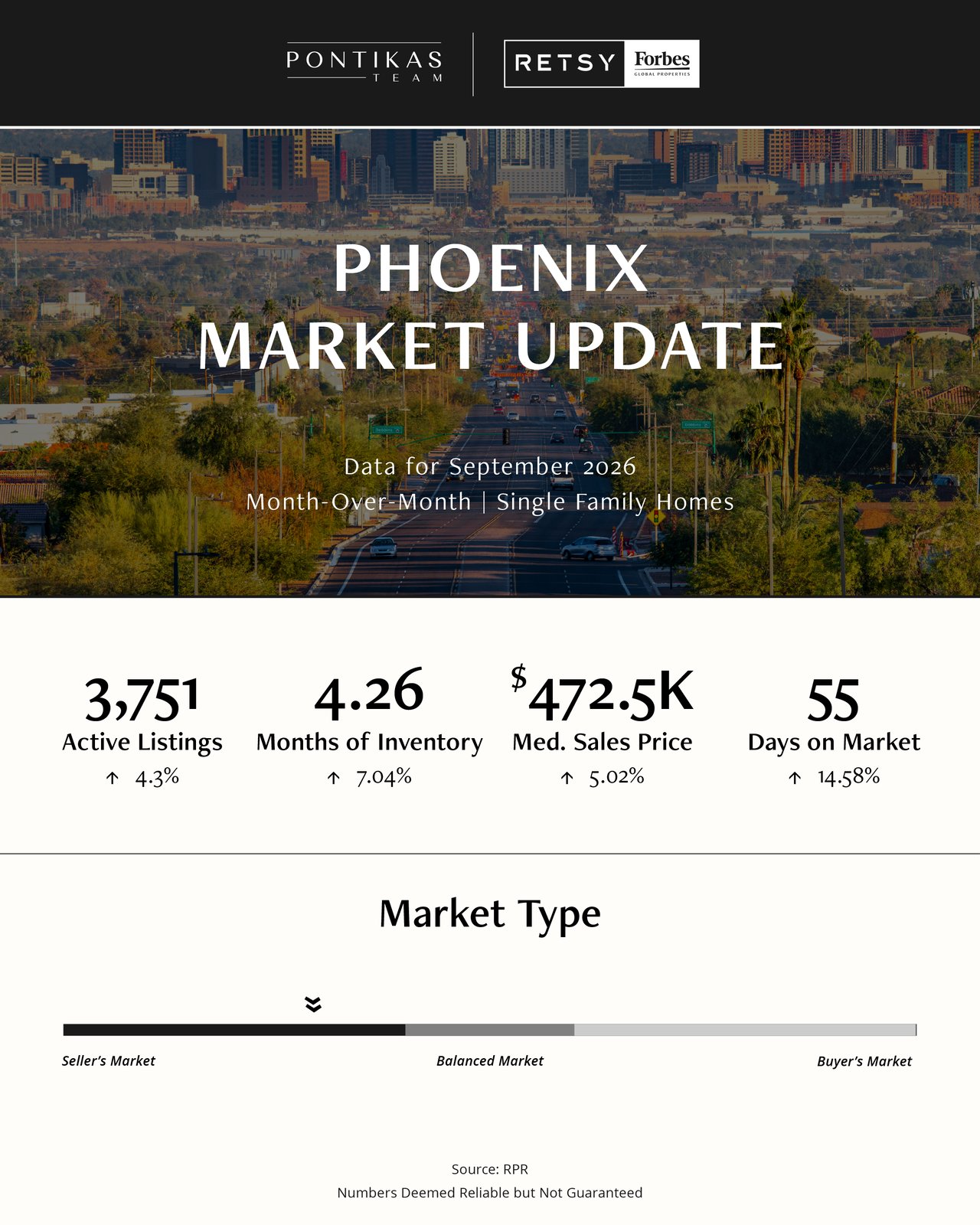
Phoenix came in at a median sales price of $472,500 — up 5% from last month, though the Cromford analysis suggests that monthly jump is largely a mix shift rather than a true appreciation signal. Annual values are essentially flat. Active listings rose to 3,751, months of inventory climbed to 4.26, and days on market hit 55 days. The market-type indicator still sits on the seller's side of balanced — but only barely, and the trajectory is moving toward balance quickly.
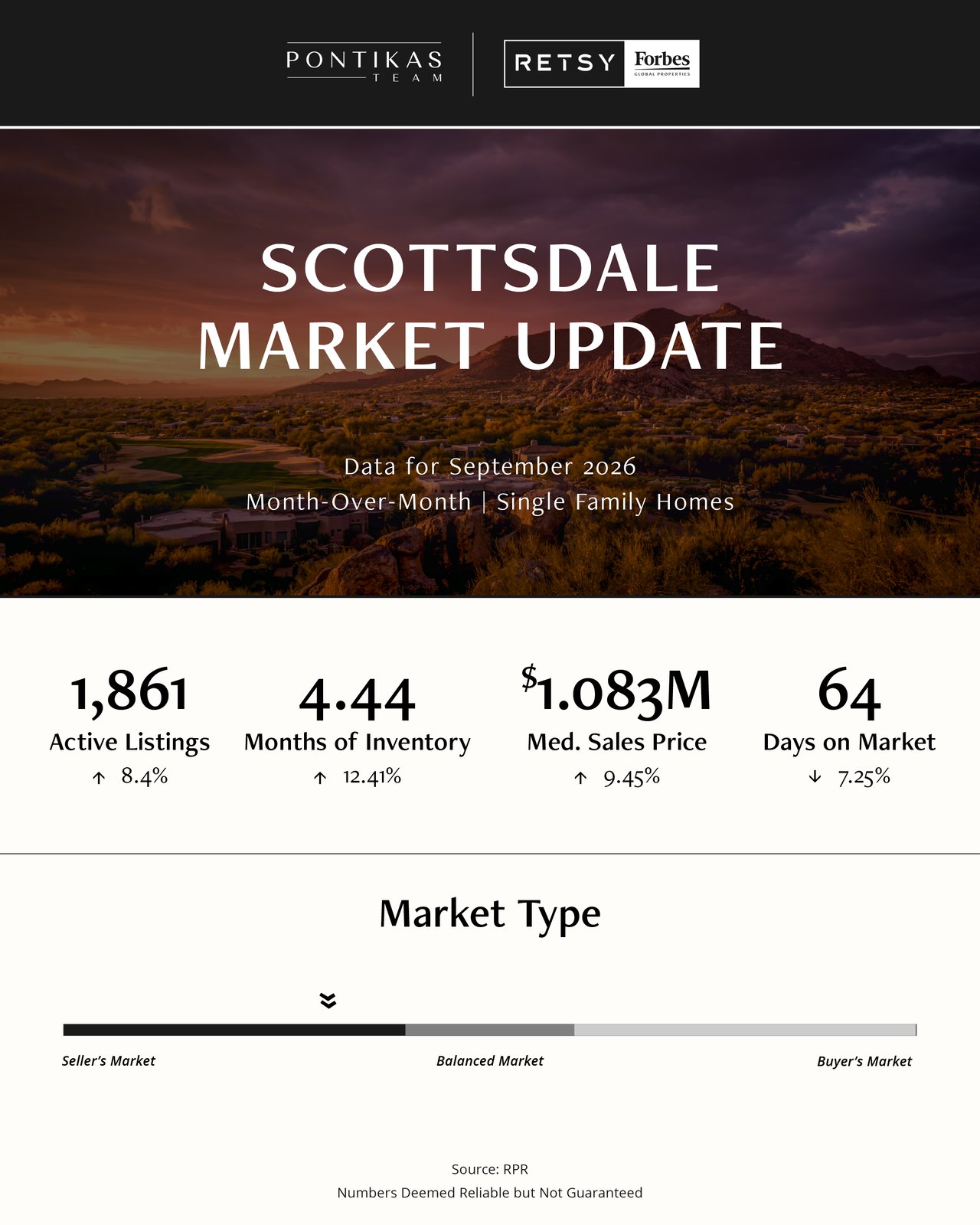
Scottsdale showed a median sales price of $1.083 million — up 9.45% month-over-month, though again, Scottsdale's smaller transaction pool makes monthly swings inherently volatile. More telling: active listings jumped 8.4% to 1,861 and months of inventory rose 12.41% to 4.44 months — the highest reading we've seen in Scottsdale in well over a year. Days on market actually improved, dropping to 64 days. The market sits at the seller's side of balanced, but inventory is building and buyers are deliberate.
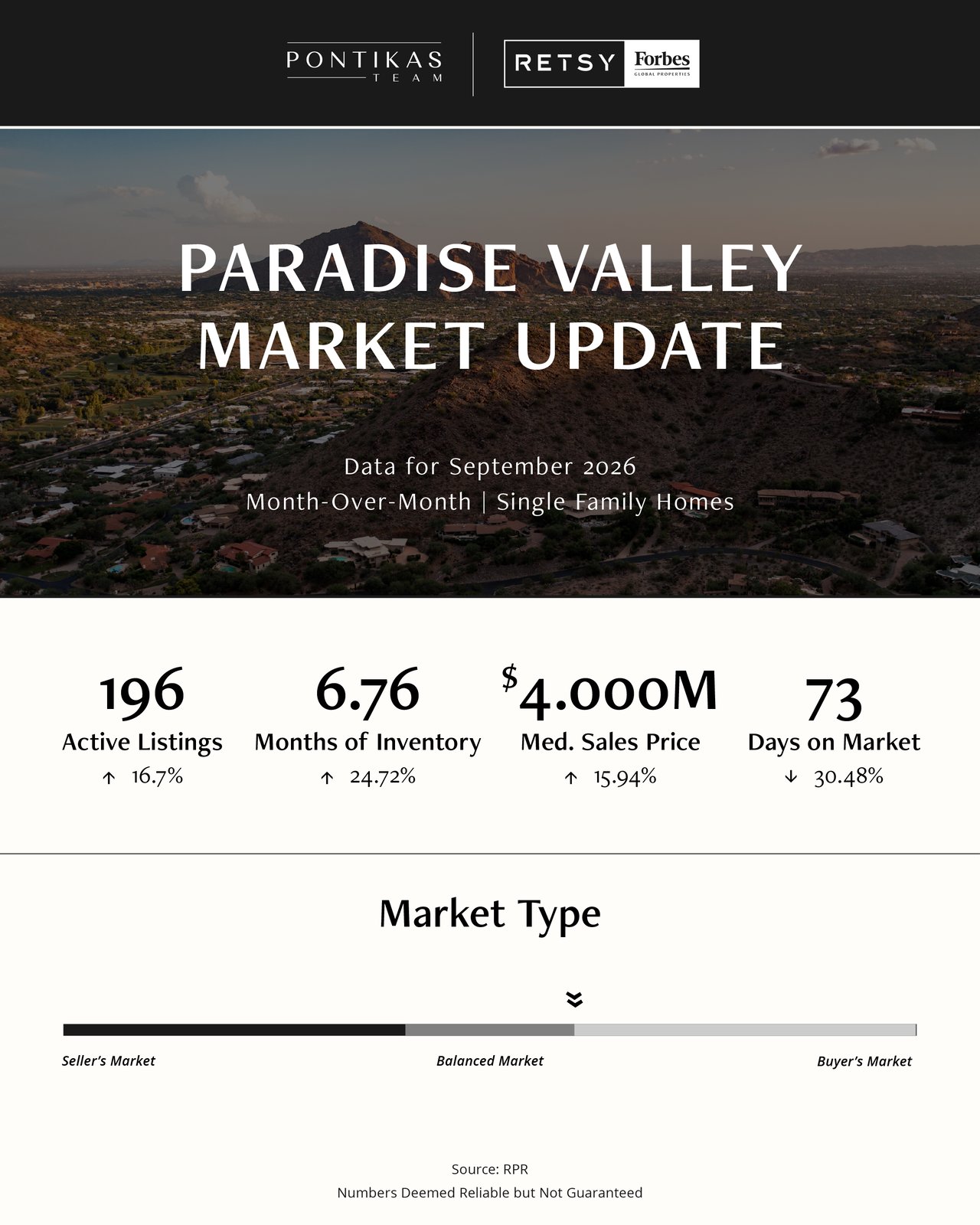
Paradise Valley is the most dramatic data point this month. Active listings surged 16.7% to 196 homes and months of inventory jumped 24.72% to 6.76 months — the sharpest inventory build in all three markets. The median sales price was $4.000 million, up 15.94%, but as always in PV, monthly price movement reflects the mix of what closed rather than a true market-wide shift. The market-type indicator has moved clearly into balanced territory, leaning toward buyers. Days on market improved sharply to 73 days — down 30.48% — meaning the homes that are selling are moving faster, which tells you buyers know quality when they see it.
WHAT THIS MEANS FOR YOU
If you're a seller: This is not the market of 2021, or even 2023. Buyers have options, time, and leverage they haven't had in years. The gap between what sellers hope to get and what buyers are willing to pay is the widest it's been in this cycle. The ARMLS data shows that homes metro-wide are averaging 86 days on the market. If your home has been sitting without meaningful showing activity, the answer is almost always price — not marketing, not timing, not luck. A realistic price is the only thing that cuts through a distracted, rate-weary buyer pool right now.
If you're a buyer: With 2,771 Phoenix homes for sale not already under contract, four months of supply, and sellers accepting an average of 97.36% of list price — buyers have more room to negotiate than at any point in the past two years. Seller concessions, rate buydowns, repair credits, and flexible terms are all realistic asks right now. The right homes at the right prices are still moving — but you have time to be thoughtful, and you have leverage. rjhhomesteam
THE HONEST BOTTOM LINE
As one market analysis put it plainly: "If mortgage rates drift down and stay there, contract activity can pick up quickly. If rates move back up, expect more price cuts and longer days on market." That's the fork in the road we're sitting at right now. The post-election environment and any rate movement in November will tell us a lot about how Q4 and early 2027 shape up. scottsdaledesertinspections
What doesn't change regardless of where rates go: homes that are priced correctly, presented beautifully, and marketed to the right buyer will still transact. The market hasn't stopped — it's just become unforgiving of homes that aren't positioned precisely right.
If you want an honest conversation about what your home is worth in this market, or what strategy makes sense for your situation, I'm here for that conversation. No spin, no cheerleading — just real talk and real data.
Reach out anytime.
— Debbie Pontikas, The Pontikas Team
Paradise Valley, Phoenix & Scottsdale, AZ | pontikasteam.com | @DebbiePontikasRealtor
Source: RPR/ARMLS. Numbers deemed reliable but not guaranteed.