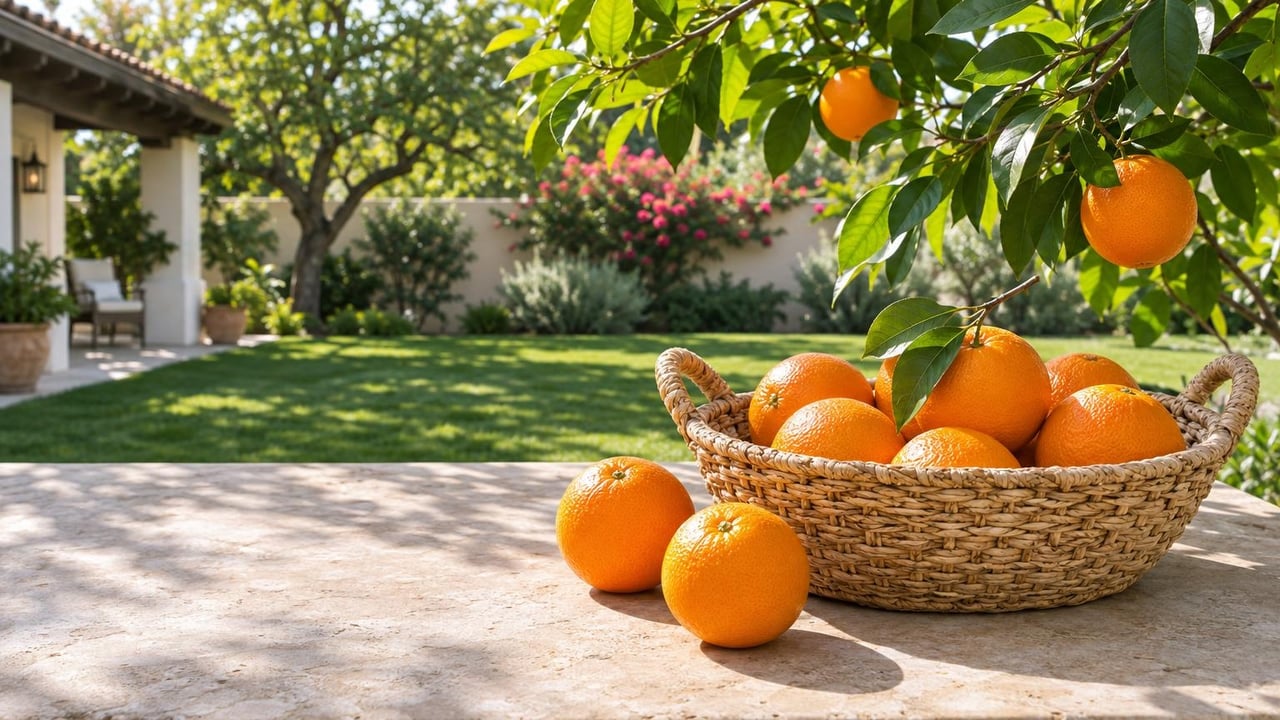
"The beginning of the year is prime time for citrus gleaning, and the Arcadia neighborhood has no shortage of citrus trees ripe for the picking," Arcadia News wrote in its guide to donating leftover fruit. Some Arcadia yards are ahead of that schedule. The University of Arizona Extension's guide to low-desert citrus says Parent Washington navels are ready around Thanksgiving or the first of December. That puts the start of the season at roughly today.
The neighborhood's own drop-off, the St. Mary's Food Bank Citrus Saturdays at Shepherd of the Hills UCC on East Lafayette Boulevard, doesn't open until February 6, 2027. That leaves about ten weeks when an Arcadia tree is producing with no drop-off inside the neighborhood, and the first organized outlet anywhere, the St. Mary's warehouse in west Phoenix, doesn't open until January 11. Treat those weeks as a season to plan, and the winter goes more smoothly.
Thanksgiving Week, When the First Navels Turn
These lots were planted for this. The Arcadia Camelback Mountain Neighborhood Association's history says the Citrus Homes tract was recorded in June 1915, and the original Arcadia subdivision followed in December 1919, with 5- to 10-acre lots sold as small citrus orchards. The orchards were later divided into house lots, but plenty of trees stayed. The Arizona Republic's 2025 history of Phoenix citrus names Arcadia as one of the Phoenix neighborhoods where residential trees are still standing.
Not every tree ripens at once, and that's what makes the winter manageable. The Extension guide says the early Fukumoto navel is picked by late October or early November. Parent Washington follows around Thanksgiving, and Lane Late can wait until January. Mandarins have their own spread. Algerian, Clementine and Fairchild ripen in November, Dancy is picked starting in December, and Kinnow matures in January.
So a yard with a navel and a tangerine has ripe fruit this week, with more coming. A yard with a Lane Late, a Valencia or a grapefruit has trees that aren't ready yet.
December, When the Tree Is the Pantry
Grapefruit is the variety that most rewards patience. The Extension guide says Marsh grapefruit can be picked in December but is usually best from March through May. Redblush can be picked starting in December and keeps improving the longer it stays on the tree. Valencia oranges aren't fully mature until about March. For an Arcadia household, the tree itself is the best storage for those varieties. Pick grapefruit a bag at a time for the kitchen through December, and leave the bulk hanging.
Leaving fruit on the tree means checking it. University of Arizona Extension's roof rat guide says the rats often eat the pulp out of oranges while the fruit is still hanging, leaving only the empty rind. Maricopa County's roof rat guidance says roof rats eat citrus and other fruit and are most active from November through May, which lines up almost exactly with Arcadia's citrus season. The neighborhood association's roof rat page says to pick citrus before it hits the ground, because the fruit is both food and water for the rats. University of Arizona Extension also recommends timely harvest and quick removal of fallen fruit.
That gives December two jobs. Leave the late varieties on the tree while watching for hollowed rinds, and clear anything that drops every week. Arcadia News notes that overripe citrus attracts pests, especially roof rats. Fallen fruit shouldn't sit on the ground waiting for a drop-off date.
The Cold Nights From Late December Through January
The frost window opens partway through the season. University of Arizona Extension's citrus cold-protection guide puts Phoenix's average first frost on December 27 and its average last frost on January 21. It adds that conditions on a single site can differ by several degrees. On an Arcadia block, that can mean one corner of the yard runs colder than another.
The same guide says orange and grapefruit trees may survive down to 20°F without significant damage, while lemons and limes can be damaged below 25°F. When a hard frost is coming, it suggests covering small trees with blankets, quilts or burlap. Extension's general frost protection guide recommends cloth or paper over plastic and says to drape it all the way to the ground. It says properly applied frost cloth protects to about 30°F, some fabrics protect to 20°F, and young citrus trunks should be wrapped.
A cold night also affects the picking plan. The citrus guide says frost-damaged fruit can still be juiced if it's harvested soon after the frost. If a freeze hits a tree loaded with navels in early January, it makes sense to pick that week and juice the fruit rather than wait for a drop-off.
January 11, When the Warehouse Opens
The first organized outlet of the season is across town. St. Mary's Food Bank takes citrus drop-offs from every ZIP code at its Phoenix warehouse, 2831 N. 31st Avenue, from January 11 through April 30, 2027, 8 a.m. to 4 p.m. A second warehouse in Surprise keeps 8 a.m. to 3 p.m. hours.
St. Mary's also runs free volunteer gleaning crews that pick trees at the house, but that program covers only ZIP codes 85351, 85373, 85374 and 85375 in the West Valley. For 85018, the fruit travels by the homeowner's car. Arcadia News suggests homeowners either donate the fruit themselves or hire someone to pick and haul it. Arcadia News reported that volunteers with Project Roots would pick up citrus at homeowners' locations in 2025. If you're interested this winter, contact the group directly.
Drop-offs ask for the same standard everywhere. Arcadia News says donations should be clean fruit with no leaves, stems or decay. The December routine of picking promptly and clearing drops is also what keeps the fruit in donation shape.
Three Saturdays on Lafayette Boulevard
Arcadia used to run this itself. Arcadia News recounts that roof rats discovered in 2001 prompted Arcadia's Citrus Program, a group of volunteers who collected fruit from the surrounding neighborhoods. The program was suspended in 2015 after Asian citrus psyllid was found in western Maricopa County.
The Citrus Saturday at Shepherd of the Hills UCC is what remains, and it's in the neighborhood. The church at 5524 E. Lafayette Blvd. partners with St. Mary's to collect fruit on February 6, 13 and 20, 2027, from 9 a.m. to 3 p.m. St. Mary's other church drop-off this winter is in Sun City West, so these are the only Saturdays on that schedule that fall inside an Arcadia ZIP code.
The dates suit the trees. By early February the Parent Washington navels and most mandarins have finished, the Lane Lates are ready, and grapefruit is close to its best months. A household that held its grapefruit and late navels through December can take one full load to Lafayette Boulevard on February 6 and still have fruit left on the tree for the kitchen.
March Through April, Grapefruit's Best Months
The season ends on the varieties that waited longest. Valencias are mature around March, and Marsh grapefruit is usually at its best from March through May. Once the February Saturdays are over, the St. Mary's warehouse on 31st Avenue takes donations through April 30, 2027.
A lot of the fruit never leaves the block. In its 2025 reporting, The Arizona Republic described backyard citrus going into fresh juice, getting passed to friends and family, and being traded for eggs and other produce. Roof rats stay active until May, so the spring fruit needs the same care as the December fruit. Pick it before it falls.
If your trees run on flood irrigation, winter dry-up dates affect the same yard, and our post on Arcadia's two irrigation clocks lays out both calendars. What the same trees do underground is covered in our citrus and sewer line post.
Arcadia's lots were first sold as citrus orchards, and the trees are still part of owning one. If you'd like local help with picking, hauling or tree care this winter, The Pontikas Team keeps a vendor directory of home service providers we trust. When you'd like to know what your yard and your house are worth together, ask for a free home valuation.